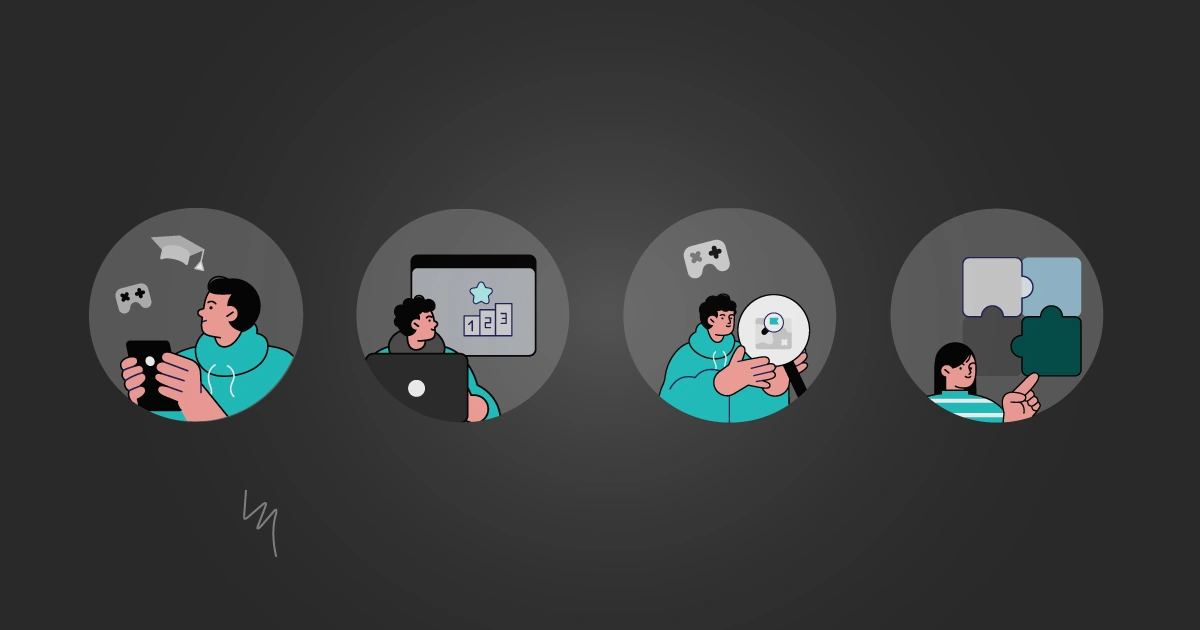

Gamification is an innovative paradigm driving pedagogical design that harnesses principles of human psychology for engagement. It incorporates game-friendly strategies and ideas to boost participation and motivation in traditional non-game activities. Fundamentally, it is the use of game-based elements—like leaderboards, achievements, missions, and competitive features—to make things more engaging and fun.
Gamification is changing the corporate training world by encouraging learners to take a different and positive stance on the training day. It turns classic learning into an engaging and interactive experience, becoming a common and trending addition to corporate training programs.
Using this interactive methodology helps connect learners to the topic in a way that increases concentration, helps them work through an idea, and retains the topic. The results are evident: learners become more engaged and always show better results.
According to the Research & Markets report , the global gamification market is projected to grow significantly. It is estimated to reach USD 61.30 billion by 2030 at a compound annual growth rate (CAGR) of 25.85% during the forecast period. This remarkable expansion is largely driven by the rapid proliferation of smartphones and mobile devices, which have created a substantial user base for gamification applications.
By 2026, gamification in corporate learning will increasingly integrate generative AI, skills intelligence platforms, and real-time performance analytics. These technologies will allow organizations to dynamically adjust challenges, rewards, and learning paths based on role-specific competencies and business KPIs—making gamification outcome-driven rather than a surface-level engagement tactic. This indicates a major revolution in gamification across different sectors.

Gamification Features Shaping Employee Training in 2026
A gamification framework turns workplace training into a fun, goal-driven, and results-oriented process by considering the following key features:
Clearly Defined Goals
Workplace training programs are no exception, having to be led by clearly defined goals. Gamified training programs need to focus on moving employees toward completing these goals. Setting SMART goals–Specific, Measurable, Achievable, Relevant, and Time-Bound–ensures these training objectives are clear and attainable within a certain timeframe. It removes guesswork and ambiguity, lays out a timeline and helps employees set up for success in quantifiable ways.
Gamified In-Lesson Activities
Game elements need not be added separately to the training process; they can be integrated directly into the lessons. Examples include:
- Checkpoint Quizzes: Brief, interactive pop-up quizzes are placed within the story to enhance understanding.
- Role-Playing Scenarios: Simulated scenarios that engage the learners in decision-making and application of knowledge.
- Vocabulary Games: Activities like flashcards or word challenges to reinforce learning engagingly.
Post-Lesson Gamification
The gamified aspects can be taken further, as individual lessons must reinforce longer-term learning. Techniques include:
- Cumulative Knowledge Quizzes: Summative assessments built on prior knowledge to evaluate comprehension from several lessons.
- Recall: Activities focusing on revisiting previously taught content with multiple efforts and variations to ensure the best retention possible.
Competitive Elements
Adding competition elements like points, badges, and leaderboards creates a competitive environment. These elements motivate employees to do their best work and maintain their zeal during training.
Incentive-Based Rewards
Tangibles are another layer on top of the gamification layer, where points and badges increase engagement. Providing incentives for achieving specific milestones motivates learners to work through lessons actively.
Progressive Scorecards
A scorecard provides an intuitive and concise summary of the performance of individual learners. Configuration elements can include one or more of the following:
- The learner’s name, profile photo, or avatar.
- Total experience points earned, and total badges received.
- Details of leaderboard ranks and level progression.
Downloading these summaries can be very helpful for learners and L&D teams. Performance indicators are displayed, possible weaknesses are explained, and progress is made without deep-dive analyses.
In 2026, progressive scorecards will increasingly integrate skills frameworks and proficiency benchmarks, enabling L&D teams to map gamified achievements directly to workforce capability development, internal mobility, and succession planning.
Innovative Approaches to Gamification Design in 2026
Learning leaders must design, apply, and think out of the box to improve gamified training. Below are fundamental methods to develop an interactive and impactful training experience:
- Personalize Learning: Allow users to customize their online persona (e.g., avatar selection, color play on their user ID, etc.). Use their names throughout the course and allow them to follow learning paths to make it a more personalized experience.
- Incorporate Storytelling: Include real-world examples that relate training material to specific stories. Learn more about making learning engaging and relatable with characters, conflicts, and goals.
- Make Activities Challenging: Create learning events that challenge learners to learn before they move on. Steer clear of ridiculously simple activities to avoid bored interest and motivation.
- Add Variety: Incorporate various interactive elements such as quizzes, mini-games, and competitions to ensure the course remains lively and engaging.
- Break Content into Smaller Parts: Break long sections into shorter, goal-oriented blocks with interactive components to improve comprehension and retention.
- Introduce Time Pressure: Design timed challenges to reflect real-life scenarios and encourage fast decision-making and excitement.
- Offer Rewards: Motivate learners with badges, points, and other incentives to bridge the gap between motive and progression.
- Use Levels: Implement a leveling system to track progress and foster a sense of accomplishment.
- Create Leaderboards: Gamify your content with leaderboards to drive friendly competition and motivate learners to go the extra mile.
- Encourage Collaboration: Encourage interaction and peer-to-peer learning by including forums, chats and other group activities.
- Test Features Thoroughly: Ensure all gamified components work correctly and support the course objectives.
Another emerging design trend for 2026 is micro-gamification, where short challenges, streaks, and nudges are embedded directly into daily workflows, such as CRM systems, collaboration tools, and performance dashboards, ensuring continuous learning without disrupting productivity.
How Can Infopro Learning Help?
At Infopro Learning, we offer scalable, flexible, and affordable gamification solutions to enrich learning experiences. We specialize in creating gamification-based content (like quizzes, rewards, badges, and competing for modules) that meets learning standards and engages learners productively and intellectually. We also deliver game-based assessments that ensure low-stress testing conditions.
We deliver lightning-fast feedback to empower learners’ growth and enable trainers to make informed choices without spending on expensive test systems. We have designed our solutions to work well, even in low-tech environments, so organizations with limited resources can adopt modern, impactful training methods without putting financial stress on their budgets.
As organizations prepare for 2026, we will help enterprises align gamification strategies with business outcomes, role-based skill frameworks, and AI-enabled analytics, ensuring that learning investments translate directly into performance improvement and workforce readiness.
Conclusion
The transformative nature of gamification in learning and training is evident, bringing about a new era of engagement, interactivity, and learning outcomes. Incorporating game-based components can increase enthusiasm, improve retention, and create a feeling of success within organizations. In 2026, AI and adaptive learning will continue to improve the gamification process, making it more personalized and customized to the learners. Gamification is the future of learning and is here to stay because of its proven effectiveness. Furthermore, gamification will no longer be viewed as an enhancement but as a strategic lever for workforce transformation, enabling organizations to build skills at scale, sustain engagement, and drive measurable business impact.