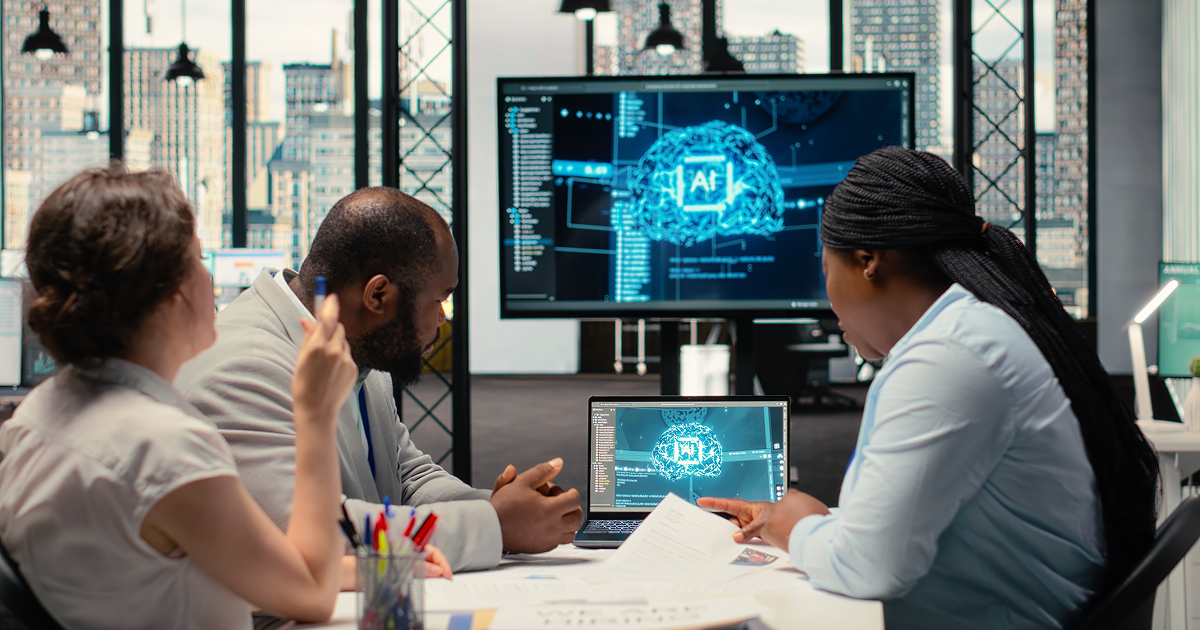
Simulation-based learning facilitates experiential learning by allowing learners to make errors and experience the repercussions of these errors in a secure environment. The learners may confidently grow their skills and knowledge, leading to deeper comprehension and a stronger sense of personal accomplishment. In comparison to traditional methods of training, such as lectures and workshops, simulation-based learning has proven to be more effective in engaging learners and helping them retain information better.
As a result of the rapid development of technology, building a realistic simulation is no longer a challenging task. Organizations may now benefit from a decreased risk factor during training by developing online simulations that provide a real learning environment.

Characteristics of Simulation-based Learning
The value of simulation-based learning lies in its ability to provide learners with hands-on insights into a subject through a realistic and immersive experience. Simulations often incorporate one or more of the following characteristics into learning and development:
- Guided Participation- Typically, a trainer will lay up the simulation’s conditions and guide learners through it. This allows the instructor to check in with the learners and help regarding any challenge resolution. Most simulations provide a pause button that learners may use to evaluate their performance at any moment.
- Environment- Simulations mimic real-world environments like an eLearning classroom lab or virtual 3-D modeling class. These virtual environments can be constructed in both real and digital spaces. They provide a secure and controlled environment where learners may experiment, make mistakes, and learn from mistakes without suffering real-world repercussions.
- Role-playing- Simulations usually place learners in a certain role within a situation. This allows learners to become engaged in the setting of the incident as if they were truly there, presenting them with a realistic experience. Working together will enable learners to respect the varied viewpoints of their team members and grasp the importance of teamwork.
- Reflection- Through structured reflection, participants can reflect on their experiences and identify the positive outcomes or learnings they have gained from participating in the simulation.
- Scenarios- In a simulation-based learning environment, learners are given a problem to solve or an event to react to in a controlled environment, with predetermined parameters like the available resources and the amount of time they have to complete the task. Therefore, participants may practice making decisions and addressing problems in a safe setting through simulations.
5 Reasons Why Simulation-Based Learning Is the Future of Learning & Development
Simulation-based learning makes it simple and convenient for learners to access high-value learning experiences, whether they build their unique simulations or choose any pre-built solutions.
The global simulation software market size is projected to hit around USD 40.5 billion by 2030 and is expected to grow at a CAGR of 11.83% during the forecast period from 2022 to 2030.
The following are the benefits that make simulation-based learning the future of learning and development:
- Continuous learning- Learners frequently experience discomfort when required to repeat previously covered information. They believe they could be spending more time of the lecturer and other learners. Through simulation-based learning, employee training is no longer a one-time event. This training method enables workers to repeat the course as often as possible. By partaking in such recurring training, individuals may develop more insight and apply their knowledge more successfully in the workplace.With digital simulation, students may monitor the efficacy of training and competence exams that provide findings to firm management or HR. These analytics give information into the effectiveness of the training program, enabling companies to adjust and personalize their approach to employee development.
- More secure environment- Simulation-based training allows learners to practice in conditions that would otherwise be impossible—far too unsafe and expensive. Employees could face life-or-death circumstances that would be hard to duplicate safely in real life by just donning a VR headset.According to McKinsey Technology Trends Outlook 2022, the global immersive reality market is predicted to grow at a 24% CAGR until 2035, driven by factors such as the growing usage of smartphones and linked devices and the rising use of 5G networks.Training using immersive reality is critical in manufacturing, construction, and other industries where consistency and precision are critical and human mistake is costly. In keeping with this obligation, employing simulation is the ideal answer.
- Economical- Learning simulations are far more cost-effective compared to offline simulations or traditional training. This style of instruction does not need a specific place or an on-site educator. As a result, while hosting training courses, businesses no longer have to suffer venue expenditures. Compared to traditional training methods, simulation-based learning had a significant favorable influence on nurturing complex capabilities.
- Personalization- Using simulation-based training, learning leaders may develop a curriculum that addresses employee experience gaps. It provides personalized learning experiences and a variety of employee training options. For instance, a sales manager with strong communication skills but inadequate objection-handling abilities may benefit from simulation-based exercise that focuses on strengthening the latter skill. This form of customization is an efficient method for increasing employee productivity.
- Enhanced employee motivation- Employees need help grasping new skills or polishing old ones by attending theoretical, informative workshops. Having memorized all the regulations and guidelines, employees feel hesitant about using the information obtained in practice.The more the practice, the better learners get and the more confident they become. As a result, virtual reality training provides employees with practical skills and introduces them to the difficulties they might face, increasing their ability to make autonomous decisions.
Types & Use Cases of Simulation-Based Learning
Simulation-based learning offers learners hands-on experiences that closely resemble what they would encounter in real-world settings. Organizations can help learners improve both their technical skills and decision-making abilities by placing them in real-life situations. And they can do this without worrying about making mistakes in real life.
1. Role-Play Simulations
- What it is: Learners are engaged in acting out various situations that can happen at work, for example, customer service or conflict resolution.
- Use Case: The most effective way to train for the acquisition of soft skills, such as negotiation, leadership, and communication, is through role-playing simulations.
2. Scenario-Based Simulations
- What it is: Presentation of a storyline or a case to the learners, and then they had to take actions that would affect the results.
- Use Case: It may be helpful in training for compliance, sales enablement, or making ethical decisions.
3. Virtual Reality (VR) Simulations
- What it is: The release of a three-dimensional, real-world environment where learners can practice real-world situations.
- Use Case: VR technology is well-suited for sectors that operate in high-risk areas, such as the medical field, the aviation industry, and the manufacturing of goods.
4. Technical & Equipment Simulations
- What it is: Digitized pictures of tools and technology, or simplified versions of the system.
- Use Case: It can be a very good tool for first-year engineers who need to prepare for technology in the safest way possible for complex equipment through the exercise of on/off procedures, etc.
5. Gamified Simulations
- What it is: Consists of training scenarios that have some elements of the games, such as points, levels, or leaderboards.
- Use Case: In this way, the learners become more active participants as they are either engaged in a competitive or a collaborative situation. Consequently, their motivation and retention skills get enhanced.
6. Business & Strategy Simulations
- What it is: In a controlled business environment, participants perform as business managers, taking the necessary strategic decisions to turn the business into a successful one.
- Use Case: Through this method, the leadership, creative problem-solving, and financial intelligence of managers and executives are developed.
Conclusion
Using simulations to find the best-case methods is the best way for businesses to guarantee efficient training. If you’ve been considering investing in simulation-based learning for your employees, there’s no better time than now. Indeed, simulation-based learning programs have provided modern businesses with a distinct competitive advantage and other benefits listed in this blog.
Are you seeking solutions for simulation-based learning? Infopro Learning, a 25+ year-old provider of blended learning, performance enhancement eLearning methodologies, and cutting-edge simulation-based learning solutions, has won several accolades and received positive reviews.
Frequently Asked Questions (FAQs)
-
remove What is simulation-based learning?Simulation-based learning is a hands-on approach to learning that utilizes a controlled digital or physical environment to recreate real-life situations. It allows learners to engage in hands-on exercises where they can practice skills, make choices, and see the results without having to deal with real-life problems. According to Infopro Learning, this method bridges the gap between theory and practical application by offering a hands-on approach that enhances comprehension, retention, and engagement.
-
add What are the disadvantages of simulation-based learning?Simulation-based learning offers many benefits, but it also has certain drawbacks. Some of these are costly initial development expenses, design and execution that takes a lot of time, and the necessity for technical know-how to make simulations that look and work like the real thing. Additionally, if not properly aligned with learning objectives, simulations may become overly complex or divert attention from the core competencies they aim to develop.
-
add How does simulation-based learning benefit employee performance?Simulation-based learning significantly improves employee performance by fostering critical thinking, decision-making, and problem-solving skills in a risk-free environment. Infopro Learning emphasizes that employees can practice tasks and respond to complex situations without real-world repercussions, leading to increased confidence, faster onboarding, better knowledge retention, and enhanced readiness for job-specific challenges—all of which contribute to improved performance and long-term success.
-
add Which industries benefit most from simulation-based learning?Industries that require adherence to strict safety, accuracy, and compliance standards derive significant benefits from learning through simulation. Some of these are healthcare, aviation, manufacturing, defense, and IT services. According to Infopro Learning, companies in these industries use simulations to train employees in high-stakes situations where they need to perform tasks correctly and follow established rules.