


Dr. Marline C. Duroseau is a dynamic speaker, TEDx presenter, author, and thought leader specializing in leadership, resilience, and personal disruption. A first-generation American and daughter of Haitian immigrants, she built an impressive career from payroll professional to Chief Financial Officer while earning her doctorate in organizational leadership. Dr. Duroseau is known for her unique perspective on how personal experiences—particularly invisible challenges like infertility—shape leadership effectiveness. Her work focuses on empathy, emotional intelligence, and creating inclusive workplace environments where individuals can thrive. Through her research and speaking, she empowers leaders to better understand people and drive meaningful organizational impact.
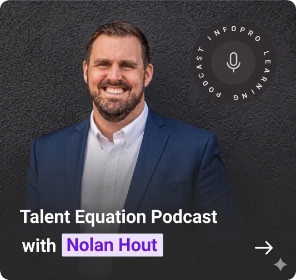
Nolan Hout, Senior Vice President, Growth, Infopro Learning
Nolan Hout is the growth leader and host of this podcast. He has over a decade of experience in the Learning & Development (L&D) industry, helping global organizations unlock the potential of their workforce. Nolan is results-driven, investing most of his time in finding ways to identify and improve the performance of learning programs through the lens of return on investment. He is passionate about networking with people in the learning and training community. He is also an avid outdoorsman and fly fisherman, spending most of his free time on rivers across the Pacific Northwest.
What if the biggest factor impacting performance isn’t visible at all? In this episode, Dr. Marline and Nolan explore the role of personal disruptions in leadership and how empathy-driven leadership can unlock stronger teams and more authentic workplace cultures.
- How unseen personal disruptions affect leadership performance.
- Why empathy is the foundation of effective leadership.
- The connection between emotional intelligence and resilience.
- How infertility shaped Dr. Marline’s leadership philosophy.
- Why employees often hide personal struggles at work.
- Practical ways leaders can create safe, trusting environments.
- The importance of authenticity in leadership and teams.
- How experiential learning builds stronger, more empathetic leaders.
- The EAR framework: Emotional intelligence, Adaptability, and Resilience.

Empathy is where it starts—when people see that you genuinely care, they feel safe enough to share what they’re going through.
TEDx Speaker, Managing Director, HR & Leadership Development, Brandon Hall Group
Introduction
Nolan: Hello everyone and welcome to the Talent Equation podcast, formerly known as the Learning and Development podcast. This episode is sponsored by Infopro Learning and hosted by me, Nolan Hout. Joining me today is Dr. Marline C. Duroseau. She’s a dynamic speaker, TEDx speaker, author, and thought leader across leadership, resilience, and fertility. Today, we’re discussing how personal disruptions affect leadership performance. Welcome to the podcast.
Dr. Marline: Thank you, Nolan. It’s a pleasure to be here.
Nolan: You have a wide-ranging background. Before we dive into leadership, tell me about your journey.
Dr. Marline: I’m a first-generation American, the child of Haitian immigrants. In my household, education was everything. My parents taught us that learning is lifelong and that education is something no one can take from you.
I graduated high school, earned my bachelor’s and master’s, became a CPA, and worked at the same company for 23 years. I started in payroll and worked my way up to Chief Financial Officer.
Leadership has always been important to me. I later pursued a doctorate in organizational leadership. My parents emphasized that learning isn’t limited to formal education—it’s about acquiring knowledge and using it to help others. My journey required education, mentorship, and leadership support, which is why leadership matters deeply to me.
From Numbers to People
Nolan: What led you to focus on the human side of leadership?
Dr. Marline: I love people. Understanding people is essential because conflict often comes from misunderstanding.
In my early corporate role in payroll, I interacted with many employees and saw how important human interaction was. Even within structured systems, you’re dealing with people.
My former boss once said it’s rare to find someone strong in both numbers and people skills. That shaped my path. I’ve always loved learning and teaching, so when I pursued my doctorate, I chose leadership because everything starts at the top.
Being seen as a natural leader also brought pressure. I felt expected to perform at a high level, leaving little room for mistakes.
Personal Disruption and Infertility
Dr. Marline: That pressure became difficult when I faced infertility. I battled it for 15 years while building my career.
I was pursuing success, career growth, making my family proud, when infertility disrupted everything. Because of expectations, I didn’t share my struggles. I feared being perceived differently or losing opportunities.
That experience led me to focus my doctoral work on leadership, women, and personal challenges in the workplace.
Invisible Struggles at Work
Nolan: This highlights how people bring unseen struggles into work that affect performance. How can leaders create space for that?
Dr. Marline: It starts with empathy. When people feel genuinely cared for, they feel safe to share.
Empathy creates a space where individuals can be understood without fear. When leaders demonstrate care consistently, employees are more willing to open up.
Empathy – Natural vs Intentional
Nolan: Empathy doesn’t come naturally to everyone. But it can be practiced intentionally. You can pause and recognize moments where empathy is needed.
Dr. Marline: That’s important. Many people don’t understand how to express empathy.
Through experience, people can develop empathy. You don’t need a major life event—you can practice by putting yourself in others’ shoes.
Empathy doesn’t mean always agreeing or giving people what they want. It means responding with understanding and respect.
The EAR Framework
Dr. Marline: I developed the EAR framework:
- E – Emotional Intelligence: Be aware of your emotions and others’ emotions.
- A – Adaptability & Authenticity: Show up as yourself and adjust your approach to support others.
- R – Resilience: Built through navigating experiences and challenges.
This framework helps leaders respond effectively to disruptions and build stronger teams.
Learning Through Experience
Nolan: Learning from others’ experiences is critical. You don’t need to experience everything yourself to grow.
Dr. Marline: Exactly. Learning is continuous and comes from both formal education and lived experiences. Observing others allows us to grow without repeating the same mistakes.
Disruptions Are Universal
Dr. Marline: The biggest insight is that everyone faces disruptions.
After my TEDx talk, a woman shared that her disruption was grief after losing her father. She struggled to cope while maintaining high performance at work.
Disruptions vary—infertility, grief, stress—but everyone is dealing with something.
Leadership and Psychological Safety
Nolan: How can leaders identify disruptions without crossing boundaries?
Dr. Marline: Leaders should create open communication. Let employees know they can come to you.
Set the tone early. Be clear that while boundaries exist, support is available. Most importantly, embody this message.
If leaders say they’re approachable but act otherwise, trust is broken.
Leading by Example
Nolan: There are three levels:
- Saying “I’m here for you”
- Demonstrating it through vulnerability
- Proactively checking in
Simple questions like “Are you okay?” can make a difference.
Dr. Marline: Yes. Building relationships helps leaders recognize changes in behavior. Once trust is established, employees are more likely to open up.
Meeting People Where They Are
Dr. Marline: I had an employee who struggled in an accounting role because she preferred interacting with people.
Instead of forcing her into a rigid role, I adjusted her responsibilities. She handled accounting part-time and spent the rest of her time engaging with others.
This improved both her performance and satisfaction. Leadership involves meeting people where they are.
Human-Centered Leadership and Technology
Nolan: Technology can support leadership, but it should enhance human connection, not replace it.
AI can provide insights, but real understanding comes from human interaction.
Dr. Marline: Exactly. The human element is essential.
Closing Thoughts
Nolan: This has been an insightful conversation. We explored empathy, leadership, and how personal challenges impact performance. Thank you for sharing your perspective.
Dr. Marline: Thank you. I appreciate the conversation and your thoughtful engagement.
Nolan: This is the first episode of the newly rebranded Talent Equation podcast—a fitting discussion about balancing human experiences and leadership. Thank you again.
Dr. Marline: Thank you. I look forward to future conversations.