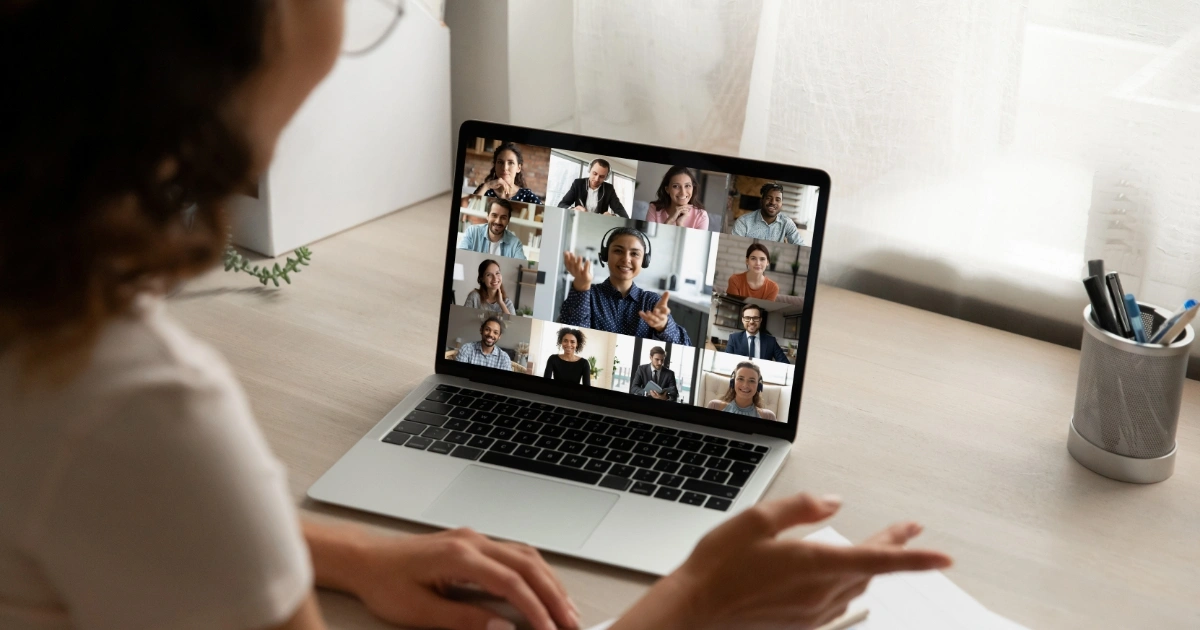
The most effective employee training and development practices in 2026 include personalized learning paths, AI-driven skill development, role-based skill mapping, learning analytics, microlearning, immersive learning, learning in the flow of work and workforce agility initiatives. These practices help organizations close skills gaps, improve employee performance, and prepare the workforce for future business needs.
Employee training and development offers opportunities that help individuals learn new skills and extend their knowledge. However, employers and employees often share the responsibility of employee learning and development. Investing in training programs helps organizations improve their employees’ current job performance, fill skill gaps, and prepare them for future roles, contributing to long-term growth and talent retention. It is generally seen as a key driver of organizational success. As remote and hybrid work environments took center stage, digital innovations ushered new ways of professional development.
Employee training and development has become a strategic priority as organizations respond to accelerated AI adoption, persistent skill shortages, and evolving workforce models. According to the Allied Market Research report, the global corporate training market is projected to reach $805.6 billion by 2035. Additionally, a significant number of organizations say upskilling and reskilling are critical to future success, reinforcing the need for scalable, technology-enabled learning strategies.
Infopro Learning’s own deployment data shows what this looks like in practice. For a U.S. regulated utility with over 7,400 employees, a structured AI literacy program built as a prerequisite for tool access achieved an 81.76% completion rate within 2.5 months and drove a 10% increase in Copilot adoption in a single month. The pattern holds across our engagements: training that gates access to a tool, rather than simply recommending it, converts awareness into measurable adoption.
12 Best Practices to Build Effective Employee Training Programs in 2026
Here are 12 best practices to ensure your employee training and development programs are effective and future-proof in 2026 and beyond.
1. Personalized Learning Paths
No more a “one-size-fits-all” in employee training and development approach. In 2026, personalized learning paths will take center stage, offering customized learning material that goes after your specific skill gaps, job roles, and career goals. Powered by AI and data, these customized pathways combine different formats —such as videos, simulations, and self-assessments— to improve engagement and retention. Furthermore, organizations are using AI to dynamically adjust learning paths as roles evolve, ensuring personalization remains continuous rather than static.
2. Manager-Led Reinforcement
Training that ends at course completion rarely changes learner behavior. Managers are the deciding factor in whether new skills actually get applied on the job. Yet, half of organizations say their managers lack the proper support to reinforce what employees just learned. Building manager coaching, follow-up conversations, and on-the-job practice into the training design — not just the content itself — is what separates programs that stick from programs that get forgotten by week two.
3. AI-Driven Skill Development
Artificial intelligence (AI) is important in skill development as it enables organizations to discover gaps and predict future upskilling needs. According to a report four of the five employees wish to learn more about applying artificial intelligence. This trend helps professionals keep their knowledge at the most relevant level in the market. It also secures their chances of riding on the bell curve of emerging technologies like artificial intelligence, cloud computing, blockchain, etc.
Gartner predicts that 40% of enterprise applications will include task-specific AI agents by the end of 2026, accelerating how employees learn, practice, and apply new skills on the job — a shift that is changing what employees need to be trained on, not just how training is delivered.
4. Role-based Skill Mapping & Assessment
Role-based skills have become relevant for employee success. Thus, skill mapping is key for leaders to realize the right training content to build those skills. With corporate skill building becoming the new normal, it is no longer just the technical or the functional skills but the role-based specializations that have taken the front seat. Learners who establish career targets interact with learning 4x more than those who do not set goals.
Organizations that adopt skills-based talent strategies are more likely to achieve desired business outcomes than those relying on traditional role-based models. Skill mapping and assessment is a bipartite process. First, it helps an organization determine the skill that needs to be added and create a skill inventory. The next step is to conduct a skill assessment to determine the employee’s proficiency level for internal inventory skills. The L&D team can create a roadmap for developing that skill, driving customer success and increasing sales. Through assessments and training, businesses can bridge the skill gaps and keep their businesses future-ready by curating the right training content.
5. In-Depth Learning Analytics
Learning analytics methodologies make your learning strategy more effective. It helps you extract insights and drive decisions through data, which adds value to your organization’s learning initiatives. Technology enables L&D leaders to gain a detailed view of learning analytics, providing insights into the right areas to target their investments. It highlights the ROI of various learning modules and empowers learning professionals to see what employees are struggling with and make better decisions in the future.
6. Social & Collaborative Learning
Social & collaborative learning enables an engaging and efficient approach to training your employees. It can occur in real-time (synchronous) or at different times (asynchronous) across the organization. Using advanced platforms to provide employee skill-based learning solutions, such as the Learning Experience Platform (LXP), can help employees gain skill sets by providing access to various learning content. It gives a sense of community build-up where learners work together for individual personal and professional growth. These skills help everyone in their peer groups and let them flourish together.
7. Microlearning
On-demand upskilling has become more common as professionals are getting busier. Microlearning will lead the way in L&D strategies in 2026 and beyond. Bite-sized data to learn in a few minutes is a great fit for teams juggling multiple hats in their job roles. Learning applications are ideal for microlearning using mobile phones and tablets, with the advantage of solidifying knowledge through repetition. Furthermore, learners can learn quickly at any time and from anywhere and apply the skills gained at any career stage.
8. Immersive Learning
Immersive learning technologies will be crucial in employee training and development in 2025 and beyond. In 2026, Augmented Reality (AR) and Virtual Reality (VR) are at their peak and are set to gain even more prominence in the corporate training world by 2025. For instance, IT professionals can now practice in the sandbox, learning and failing in a safe and simulated environment, troubleshooting systems and coding and handling complex projects without the risks and realities of the real world. This allows for more efficient and effective learning experiences, leading to better-prepared and skilled employees. Immersive learning is expanding into leadership development, safety training, and customer experience simulations. Additionally, the use of immersive technologies can also help reduce training costs and increase overall retention rates.
9. Soft Skills Training for A Human-Centric Workplace
While automation enhances technical skills, soft skills like communication, problem-solving, and emotional intelligence will continue to be critical. As a result, soft-skill training is taking hold. L&D teams will prioritize interpersonal and leadership development programs that enable people to thrive in collaborative, dynamic environments.
10. Evaluate or Assess Learning Outcomes
As budgets get tighter, it’s becoming more critical than ever for every business unit to justify its existence. The training and development department is, arguably, under more scrutiny than most. Training is often perceived as a cost center; when the going gets tough, it is often the first department to experience cuts. Measuring learning outcomes — especially as they translate into business results — is the one key thing you can do to ensure this does not happen to you and your team. Training assessment is also crucial for improving processes. Knowing not only where training has worked but also where it hasn’t — helps you to change your programs and improve outcomes in the future.
11. Learning in the Flow of Work
In 2026, learning is increasingly embedded directly into daily workflows rather than delivered only through formal training programs. By integrating learning into tools such as Microsoft Teams, Slack, CRM systems, and productivity platforms, employees can access guidance and performance support at the moment of need. Organizations embedding learning into the flow of work are three times more likely to improve performance and agility.
12. Workforce Agility & Internal Talent Marketplaces
Workforce agility is a major priority in 2026. Internal talent marketplaces connect employee skills, learning progress, and career interests with short-term projects, stretch assignments, and internal roles. This approach improves retention, reduces external hiring dependency, and accelerates skill deployment.
Traditional Employee Training vs. Modern Workforce Development
| Dimension | Legacy Model | AI-Era Model |
|---|---|---|
| Learning Design | One-size-fits-all content | Personalized, role-specific learning pathways |
| Delivery Model | Event-based, scheduled sessions | Continuous learning embedded into daily workflows |
| Focus | Course completion | Skills development and behavior change |
| Technology Use | Manual tracking with static content | AI-powered personalization, automation, and analytics |
| Decision Approach | Reactive and gap-driven | Predictive, workforce-planning driven |
| Measure of Success | Completion rates | Business outcomes, performance, and tool adoption |
Conclusion
The future of employee training and development lies in embracing innovation, personalization, and continuous improvement. By implementing these best practices, organizations can empower their workforce, drive engagement, and achieve long-term success. As organizations operate in 2026, those prioritizing strategic, data-driven L&D initiatives will be better positioned to lead their industries.
Connect with Infopro Learning’s employee training and development experts today to design impactful programs that drive growth and innovation within your organization.
Frequently Asked Questions (FAQs)
-
remove What is employee training and development?Employee training and development refers to planned learning initiatives that enhance employee skills, knowledge, and performance. Organizations use training programs, coaching, and continuous learning opportunities to increase productivity, close skills gaps, and support workforce growth.
-
add What are the biggest employee training trends?The biggest employee training trends include AI-powered learning, personalized training paths, skills-based development, microlearning, immersive learning and learning in the flow of work. Organizations are increasingly using these approaches to build workforce agility, improve productivity and prepare employees for future skill demands.
-
add How does AI improve employee training?AI improves employee training by personalizing learning paths, identifying skills gaps, and delivering relevant content based on individual needs. It also provides real-time feedback, automates administrative tasks, and uses analytics to help organizations measure learning effectiveness and improve workforce performance.
-
add What are the benefits of corporate employee training & development?Corporate employee training and development help organizations improve workforce skills, productivity, employee engagement, and retention. Effective training programs enable employees to adapt to changing business needs, close skill gaps, enhance performance, and support long-term organizational growth and competitiveness.