


Jeremy Khoh, LinkedIn Top Voice, Founder & Director, Khoh Partners Pty Ltd.
Jeremy Khoh is the Founder and Director of Khoh Partners, a leadership and team development firm focused on helping professionals build stronger communication, collaboration and leadership capabilities. A LinkedIn Top Voice, Jeremy works with organizations across industries to strengthen psychological safety, leadership effectiveness, and team performance. Before launching his firm, he spent years working in multinational organizations including KPMG and other global companies across Australia, Hong Kong, and India. His experiences leading international teams shaped his passion for helping leaders build cultures where people feel safe to speak up, share ideas, and grow. Today, Jeremy delivers workshops, keynote talks and coaching focused on human skills in the AI-driven workplace.
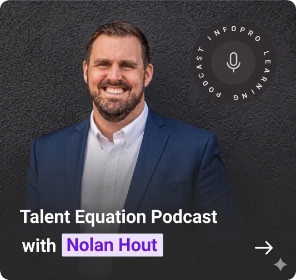
Nolan Hout, Senior Vice President, Growth, Infopro Learning
Nolan Hout is the growth leader and host of this podcast. He has over a decade of experience in the Learning & Development (L&D) industry, helping global organizations unlock the potential of their workforce. Nolan is results-driven, investing most of his time in finding ways to identify and improve the performance of learning programs through the lens of return on investment. He is passionate about networking with people in the learning and training community. He is also an avid outdoorsman and fly fisherman, spending most of his free time on rivers across the Pacific Northwest.
Psychological safety is becoming one of the most important drivers of team performance in modern organizations. In this episode, Nolan sits down with leadership expert Jeremy to explore why psychological safety matters, how leaders can create it, and why it is essential for innovation, communication, and high-performing teams in today’s rapidly changing workplace.
Listen to the episode to find out:
- What psychological safety really means and why it matters for teams.
- How Jeremy’s leadership experience shaped his interest in communication and team culture.
- Google’s Project Aristotle identified psychological safety as the top factor in team effectiveness.
- How leaders can encourage employees to speak up without fear of criticism or judgment.
- The role of cultural differences in shaping communication and team dynamics.
- How leaders can create environments where more voices are heard.
- The ODD framework for building psychological safety in teams.
- Why vulnerability from leaders helps build trust and openness.
- How psychological safety supports innovation and experimentation in the AI era.

Psychological safety is the culture that allows more hands to go up and more voices to be heard in a room.
LinkedIn Top Voice, Founder & Director, Khoh Partners Pty Ltd.
Introduction
Nolan: Hello and welcome to the podcast. The session today is sponsored by EasyGenerator, the eLearning authoring tool that lets anyone in your company create company specific training on a scale. Your sales team knows the product, your legal team knows compliance, your HR team knows onboarding. With EasyGenerator, they can all easily share their knowledge by creating engaging eLearning. Empower your experts and share what they know fast. Learn more at EasyGenerator.com.
Now that we’ve paid for this session, I’d like to welcome everybody again to the podcast. As always, I’m your host, Nolan with Infopro Learning. Joining me today, we have Jeremy, the founder and director of Khoh Partners, a leadership and team development firm specializing in equipping professional teams with communication and leadership skills.
Jeremy is a LinkedIn top voice. If you haven’t heard of Jeremy yet, go give him a follow on LinkedIn. He’s absolutely amazing. Works a lot in professional development, has experience ranging from working with large corporations like KPMG to teaching at business school.
Today we’re going to talk to Jeremy all about psychological safety, which is one of my favorite topics because I feel it’s one I know the least about. So I love to learn more about it. Jeremy, welcome to the podcast.
Jeremy: Let’s do it. Hey Nolan, hello everyone. Thanks for having me.
Jeremy’s Career Journey into Leadership Development
Nolan: Jeremy, how we always start is understanding your origin story into the corporate learning and development space. Where did you get your start?
Jeremy: Sure. My background is in accounting and finance. I started my career as an intern at KPMG and worked there for several years. I ended up working in India for a little bit as well. I’m based in Sydney, Australia.
When I came back to Sydney, I joined another large multinational in Australia. I moved through a couple of different roles and functions and worked in Hong Kong as well. When I was working for these multinational food companies, that’s when I started leading people.
When I was in Hong Kong, it was a bit of a firefighter mission. I was dropped into a chaotic situation with some interesting team dynamics. I was the regional head of finance for Hong Kong and Taiwan.
I had been spending a lot of time on personal and professional development. Whenever I had teams, I loved sharing what I was learning. I was running little training sessions with my team.
The Resignation Incident
Jeremy: A couple months into that role, I thought I was doing a pretty good job building rapport with the team. Then one day two of my core team members came into my office, handed me envelopes, and resigned on the same day at the same time.
I was shocked. I had coffee with them individually to understand their concerns. They both said the same thing. They felt they weren’t trusted and that someone was looking over their shoulders.
That moment made me reflect. Clearly, I had done something or failed to do something that created a culture where they couldn’t thrive. We brought the team together and had a working session with leadership. We created agreements and norms about how we would work together.
Both team members reversed their resignations. That moment was interesting. The head from China told me that technical accounting skills are easier to teach than interpersonal skills, and that I seemed to have a knack for the interpersonal side. That confirmed something I had already been feeling internally.
Discovering a Passion for Human Skills
Jeremy: When I returned to Sydney, I began exploring what that path might look like. That eventually became Khoh Partners. Today I run workshops, keynote talks, and coaching sessions focused on communication, interpersonal skills, and human capability in a fast-moving AI digital era.
The Mentor Who Modeled Psychological Safety
Jeremy: A couple years into my career I had a manager who I would call my first coach. At every monthly one-to-one she would ask how I was doing, what I was doing well, and what I could improve. Then at the end of every conversation she asked the same question.
“How can I improve?”
At first I didn’t know what to say.
But every month she asked again. Eventually I realized she genuinely wanted feedback. Over time that created an environment where I felt safe to express what I thought. That small microculture of safety in our interactions had a profound impact on me.
What Psychological Safety Means
Nolan: What is psychological safety and why does it matter?
Jeremy: Psychological safety is based on research from Amy Edmondson at Harvard. It’s the creation of a culture where people feel safe to speak up, ask questions, challenge ideas, and give feedback without fear of being judged or punished.
You can feel it in a room. Some rooms are silent. No one wants to speak. Other rooms feel lighter. Hands go up and voices are heard. Psychological safety is the culture that allows more hands to go up and more voices to be heard.
Why Psychological Safety Matters
Jeremy: Google ran a large study called Project Aristotle. They examined 180 teams to determine what drove team effectiveness. They analyzed everything from education backgrounds to interpersonal dynamics. The number one factor that predicted team effectiveness was psychological safety. You can have the smartest people in the room, but if they don’t feel safe to contribute, you’re not tapping into their full capability.
Cultural Differences
Jeremy: Cultural dynamics matter a lot. In many Asian cultures there is more collectivism and greater power distance between leaders and employees.
People are often taught not to challenge authority. So, when a leader asks for feedback and gets silence, it might not mean people have nothing to say.
It may mean the cultural expectation is not to speak up. That means psychological safety must sometimes be implemented differently depending on the culture.
The ODD Framework
Jeremy: One simple framework I use is ODD.
It stands for:
Open up the mic
Drop in first
Don’t make it personal
Open up the mic means creating space for people to share questions, feedback, or concerns.
Drop in first means the leader demonstrates vulnerability first. Share your own mistakes or uncertainties. Don’t make it personal means when someone speaks up with bad news or a mistake, the leader must not react emotionally. If leaders react negatively, people stop speaking up.
Misconceptions
Jeremy: Psychological safety doesn’t mean anything goes. It doesn’t remove accountability. The goal is both safety and performance.
AI, Innovation & Fear
Jeremy: In one accounting firm I worked with, they implemented something called a failure party. Teams regularly met to share mistakes and lessons learned.
That encourages experimentation and innovation. In the AI era, psychological safety allows teams to experiment, share what works, and learn faster together.
But individuals will still react differently. Some people are excited early adopters. Others worry about whether they will still have jobs. Those reactions can exist inside the same organization.
Closing Thoughts
Nolan: I think clarity will come eventually, but right now we’re all figuring it out. Jeremy, thank you for spending time with me today.
Jeremy: My pleasure. I really enjoyed the conversation.
Nolan: Thanks Jeremy.
Jeremy: Thank you.